
Category hub · coin-op history · arcade-style classics · playable in the browser
Classic retro arcade games, from the coin-op era to your browser
Before retro meant anything, arcade meant a machine: a coin-operated cabinet in a row of them, one credit, three lives, and a high score with your initials on it. This page is Doshaven's arcade lane — the history of that era in plain words, plus every legally playable title here that carries its DNA. No ROMs, no downloads, no empty promises.
Playable in the arcade lane
Every card below is a real page with a game that runs in your tab.-
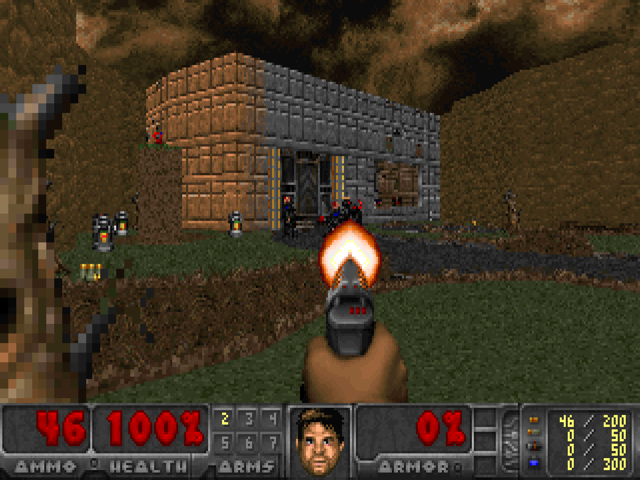 FREEDOOM
Doom 2 The Doom II-side half of the engine. Runs Freedoom Phase 2 out of the box; load your own doom2.wad for the 1994 campaign. Freedoom Phase 2 · BSD 3-Clause
-
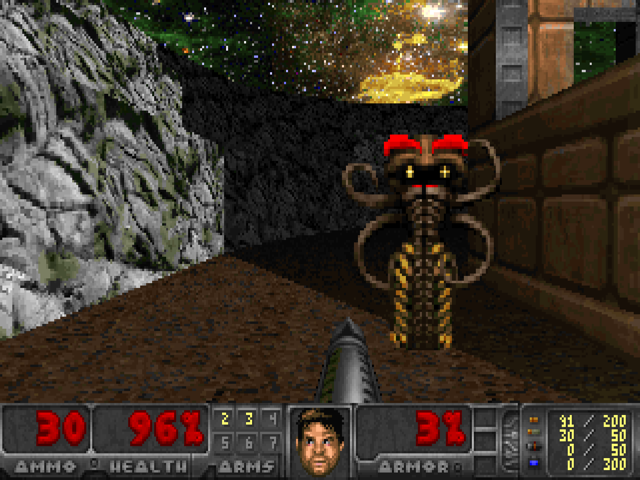 FREEDOOM
Doom Browser Coin-op pacing in first person: fast, loud, one session at a time. Starts with Freedoom Phase 1, free data. Freedoom Phase 1 · BSD 3-Clause
-
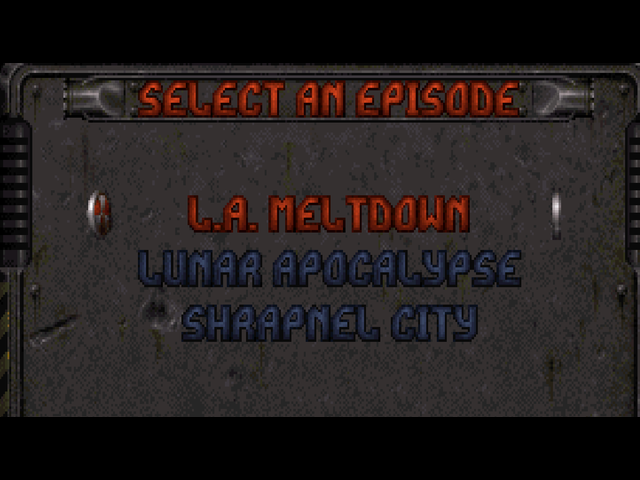 SHAREWARE
Duke Nukem 3D 1996 swagger with a one-more-try attitude: the freely distributable shareware episode on the EDuke32 engine. Shareware 1.3D · Episode 1
-
FREEDM
FreeDM The purest arcade loop on the site: spawn, fight, respawn. Free deathmatch maps from the Freedoom project. FreeDM v0.13.0 · BSD 3-Clause
-
FREEDOOM
Freedoom The free, freely shared game that makes the Doom pages possible — arcade pacing with data anyone may redistribute. Freedoom Phase 1 · BSD 3-Clause
-
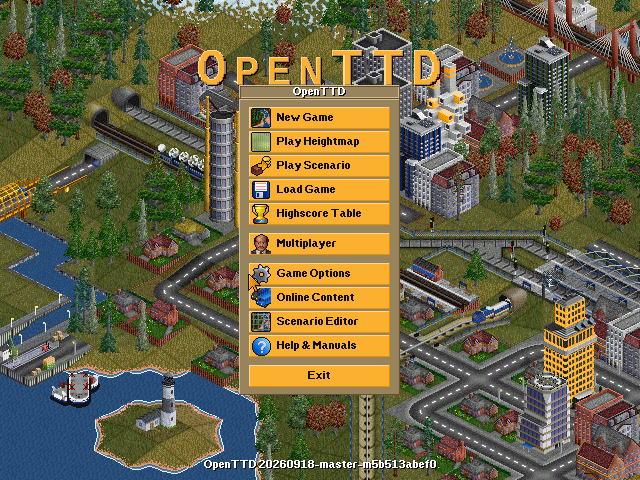 OPEN SOURCE
OpenTTD The counterweight: deep transport simulation instead of quarter-munching. Shows how far the home PC moved from the coin-op model. OpenGFX / OpenSFX / OpenMSX · GPL
-
 FREEWARE
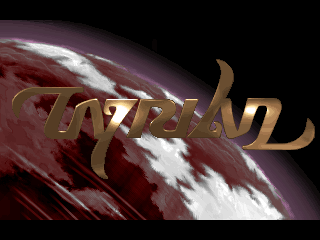
Tyrian The vertical side of the arcade formula — waves, power-ups, bosses — with DOS depth: shields, armor and a weapon shop. The complete freeware Tyrian 2.1. Tyrian 2.1 · 2004 freeware release
-
 SHAREWARE
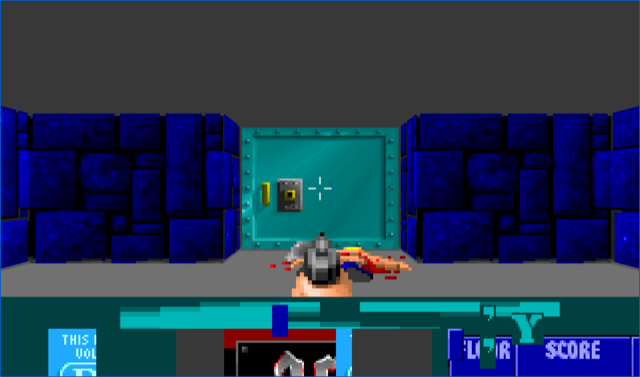
Wolfenstein 3D The most coin-op-like structure here: numbered episodes, treasure for points, extra lives and a running score. Apogee 1992 shareware · Episode 1
-
 ORIGINAL
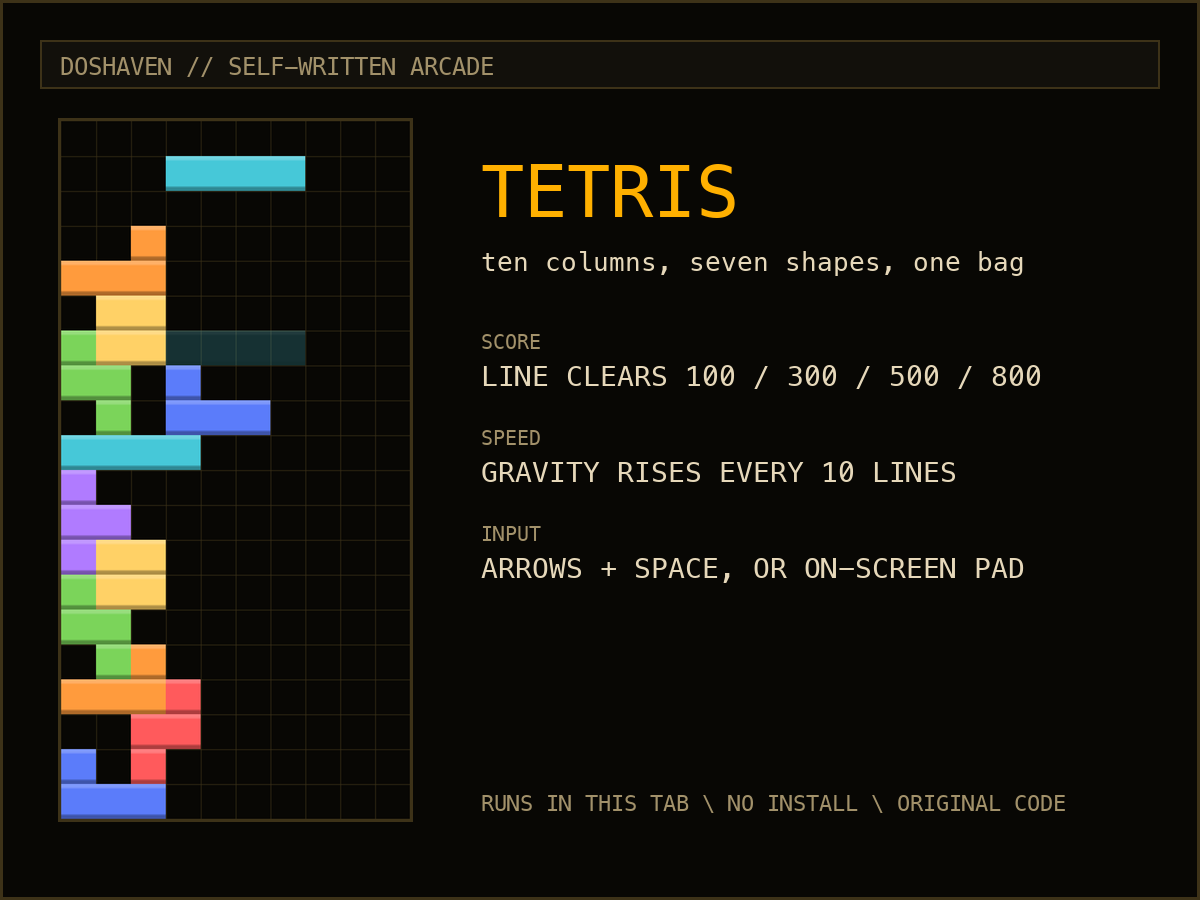
Tetris The purest arcade loop of all: one fall, one row, one more go. Written for this site, so the board, colours and code are ours. Original code · runs in this tab
-
 ORIGINAL
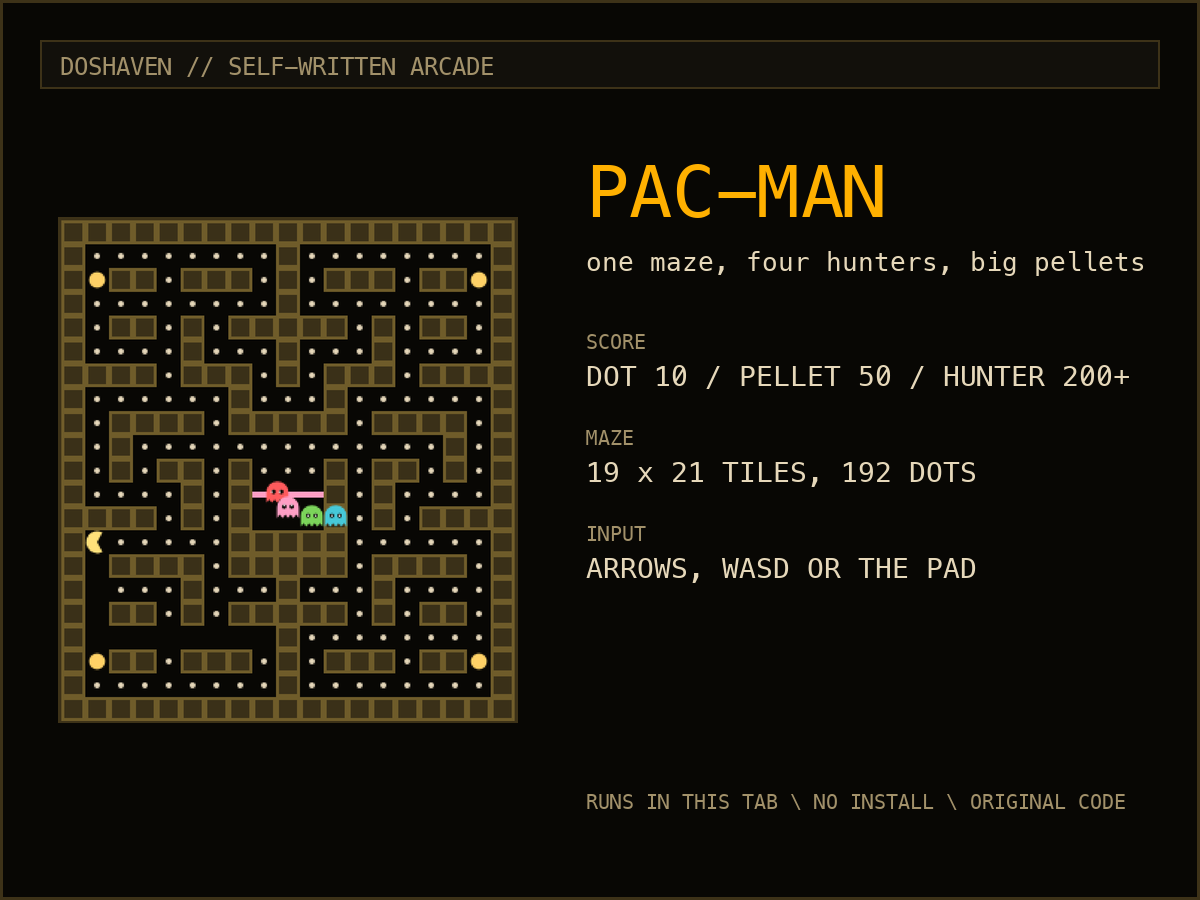
Pac-Man The coin-op chase rebuilt as an original maze: four hunters, four big pellets, no ROM and no original artwork. Original code · runs in this tab
-
The Legend of Kage BYO FILEThe Legend of Kage The 1985 coin-op ninja game, in the arcade lane of this site: our emulator, your own NES file, no hosted game data. EmulatorJS 4.2.3 · GPL-3.0
-
The Legend of Kage PLAY NOWThe Legend of Kage — plays in this tab Press start and the NES ninja game boots in the frame: an embedded third-party player runs it, so there is no file to find. Embedded player · game data not hosted here
-
ARCHIVE
SkiFree Down a slope of trees and rocks, past the monster that wakes at 2,000 metres. The 1991 Windows ski game. Runs from the Internet Archive · nothing hosted here -
ARCHIVE
Digger Dig tunnels, grab the emeralds and drop gold bags on the Nobbins: Windmill Software's 1983 IBM PC classic. Runs from the Internet Archive · nothing hosted here -
ARCHIVE
Alley Cat Jump the fence, dodge the dog and the broom, and clear the rooms of a strange house: Bill Williams' 1984 IBM PC classic. Runs from the Internet Archive · nothing hosted here -
ARCHIVE
The Oregon Trail Buy the oxen, watch the rations, ford the rivers and hope nobody gets dysentery: MECC's 1992 Deluxe edition. Runs from the Internet Archive · nothing hosted here -
SHAREWARE
Raptor: Call of the Shadows Nine missions of air and ground targets, a boss to bring down, and money for weapons between waves. Apogee's 1994 shooter. Runs from the Internet Archive · nothing hosted here -
SHAREWARE
Jill of the Jungle Run, jump and swing a dagger through forests and caves, and turn into a bird, a fish or a frog. Epic MegaGames' 1992 platform game. Runs from the Internet Archive · nothing hosted here -
FREEWARE
One Must Fall 2097 Pilots in giant robots fight one on one, with special moves and prize money for upgrades. The 1994 DOS fighting game. Runs from the Internet Archive · nothing hosted here -
SHAREWARE
Bio Menace Snake Logan shoots through a city of mutants in a platform game built on the Keen engine. Apogee's 1993 shareware episode. Runs from the Internet Archive · nothing hosted here -
SHAREWARE
Commander Keen in Keen Dreams Keen throws flower pellets at an army of vegetables in id Software's lost 1991 episode, in its 1992 shareware release. Runs from the Internet Archive · nothing hosted here
Directory
Every playable title in this lane, in plain text. A crawler can read it; so can you.| NAME | TYPE | PAGE |
|---|---|---|
| ALLEY CAT | Action | /games/alley-cat |
| BIO MENACE | Action | /games/bio-menace |
| COMMANDER KEEN IN KEEN DREAMS | Platformer | /games/commander-keen |
| DIGGER | Arcade | /games/digger |
| DOOM 2 | Shooter | /games/doom-2 |
| DOOM BROWSER | Shooter | /games/doom-browser |
| DUKE NUKEM 3D | Shooter | /games/duke-nukem-3d |
| FREEDM | Shooter | /games/freedm |
| FREEDOOM | Shooter | /games/freedoom |
| JILL OF THE JUNGLE | Platformer | /games/jill-of-the-jungle |
| LEGEND OF KAGE | Arcade | /games/legend-of-kage |
| LEGEND OF KAGE · PLAY NOW | Arcade | /games/legend-of-kage-play |
| ONE MUST FALL 2097 | Action | /games/one-must-fall-2097 |
| OPENTTD | Simulation | /games/openttd |
| PAC-MAN | Arcade | /games/pacman |
| RAPTOR: CALL OF THE SHADOWS | Shooter | /games/raptor-call-of-the-shadows |
| SKIFREE | Sports | /games/ski-free |
| TETRIS | Arcade | /games/tetris |
| THE OREGON TRAIL | Adventure | /games/oregon-trail |
| TYRIAN | Shooter | /games/tyrian |
| WOLFENSTEIN 3D | Shooter | /games/wolfenstein-3d |
| one line per playable page · free and shareware data where we host it · some titles play from the Internet Archive | ||
The arcade era, in plain words
What arcade meant
For most of the 1980s, a video game was a piece of furniture. Arcade cabinets stood in rows in arcades, pubs and corner shops, and each one ran a single game burned onto dedicated boards. You paid by the credit: a coin bought three lives or a timer, and when they ran out the machine asked for more. Space Invaders (1978) started the boom; Pac-Man, Galaga and Donkey Kong made it a golden age (1978–1984); Street Fighter II and Mortal Kombat closed the era with the early-1990s fighting wave. The design followed the coin: short sessions, instant restarts, difficulty tuned to be just survivable enough to feel worth another quarter.
Arcade versus home
The same title often existed twice: once on expensive coin-op hardware built to earn money per minute, once on the home computer or console you already owned. Home versions traded some speed and color for ownership — no coins, no queue behind you — and PC ports could be slower, longer, stranger. That split is why retro arcade games and retro home games overlap without being the same thing: Pac-Man the cabinet and Pac-Man on a home keyboard shared a name and a maze, but not a business model.
The DOS bridge
DOS-era developers grew up on both. They kept the arcade skeleton — lives, scores, stages, bosses, that one-more-try loop — and rebuilt it for a machine with a keyboard and a hard disk. Wolfenstein 3D is openly arcade in structure: numbered episodes, treasure pickups for points, extra lives, a score on screen. Doom kept the speed and the wave-based pressure, and its deathmatch mode turned sessions into pure arcade loops. Duke Nukem 3D carried the attitude. And when the PC finally had the memory for it, games like OpenTTD went the other way entirely — depth no coin-op could sell. That arc, from quarter to hard disk, is exactly what this hub groups together.
What the words mean today
People searching for classic retro arcade games or old arcade games usually mean one of two things: the original coin-op titles of 1978–1995, or the home-computer games that carried their design. This page serves both intents honestly: the history is about the coin-ops, and the playable list below it is the DOS-side inheritance — the games whose data can actually be served in a browser — plus two arcade-style games written for this site, on a board of their own.
What we host, and why
Original coin-op board data is still commercial and cannot be redistributed, so Doshaven does not host it, bundle it or link to downloads — no MAME ROM packs here, ever. This site only serves data it is allowed to serve: Freedoom and FreeDM (free games anyone may share), the shareware episodes of Duke Nukem 3D and Wolfenstein 3D (distributed freely by their publishers), the complete freeware Tyrian 2.1 (released as freeware by its co-creator in 2004), and the open OpenTTD build. In short: original arcade game data cannot be hosted here; this hub lists legally distributable versions, free data and remakes that we serve, and pages where the game runs from someone else's server. A few cards above are a different arrangement rather than a different rule: Legend of Kage, plays in this tab embeds RetroGames.cz's own player, and the newer cards, from Digger to SkiFree, play copies kept by the Internet Archive, so those games load from their servers and we still serve none of their data.
How this lane grows
When a genuinely redistributable arcade-style title — say, a freeware shoot-’em-up like Tyrian above — clears our hosting checks, it gets its own play page and a card above, exactly like the other games. Until then the hub stays honest and lists only what exists. No placeholder slots, no vaporware.
Where to go next
New: Retro video games by machine — Atari 2600, NES, SNES, Genesis, Game Boy and DOS in one plain-language guide. The full game directory is the catalog on the homepage. For sources and licences behind every hosted build, see the legal page, and for how the site works, about.
Arcade FAQ
What are retro arcade games?
Retro arcade games are the coin-operated video games of roughly 1978 to the mid-1990s: Space Invaders, Pac-Man, Galaga and Donkey Kong in the golden age, then the early-1990s fighting wave led by Street Fighter II and Mortal Kombat. The format was simple on purpose — insert a coin, get a few lives, chase a high score before the difficulty curve finishes you off. Retro just means old enough to be classic, and those cabinets are the root of almost everything on this site.
Can I play original arcade ROMs on Doshaven?
No. The data on original coin-op boards is still commercial and cannot be redistributed, so we do not host it, bundle it or link to downloads. Where we host a game, it is data we are explicitly allowed to serve: the free Freedoom games, shareware episodes such as Duke Nukem 3D and Wolfenstein 3D, and the open OpenTTD build. Some pages in this list do not host their game at all: they show a copy kept by the Internet Archive and say so on the page.
Which games here feel closest to the arcade?
Wolfenstein 3D is the most coin-op-like in structure: numbered episodes, treasure for points, extra lives and a live score. FreeDM is the purest loop — spawn, fight, respawn. The Doom Browser and Doom 2 pages carry the same quick-session pacing in first person, and Duke Nukem 3D shareware keeps the one-more-try attitude. OpenTTD is the deliberate counterweight: deep simulation instead of quarter-munching.
Are arcade games and DOS games the same thing?
No. Arcade games ran on dedicated coin-op hardware in public places; DOS games ran on home PCs. The two are cousins: through the 1980s and early 1990s, hit arcade games were ported to home computers, and DOS developers borrowed arcade structure — lives, scores, stages, difficulty spikes — even as PCs allowed longer, slower games. This hub tells that side of the story while the play pages run the DOS-era results.
What does this arcade hub add?
One entry point for the arcade angle: the history above, and a direct list of every playable title. The main catalog on the homepage stays the full directory of games; this page groups the ones that carry arcade DNA so the coin-op story has a home without promising ROMs.
Is it free, and do I need an account?
It is free and there is no account. Games run in the tab you already have open — no installer, no emulator setup. Some pages can also load your own game files (a Doom WAD or a DUKE3D.GRP) from your disk; those stay in your browser and are never uploaded.